Friday, November 11, 2011

Arusha, Tanzania


We journeyed into Arusha on Friday to visit the International Criminal Tribunal for Rwanda, where trials for the Rwandan genocide are underway. The genocide took place in 1994. The trials (of the officials largely responsible for the 800,000 killings) began soon after the killings and should finish up this year.

Hearing about the genocide and the center was extremely interesting and put a lot of African history in perspective. So many African countries have experienced similar tragedies. Kenya was the site of horrendous post-election violence in 2008; trials are currently underway at the Hague.

Our next stop in Arusha was at a mental health clinic. We learned a lot from the staff here; mental health doesn’t receive much attention among the many health problems that plague Kenya and Tanzania alike.

We went shopping at a market in Arusha, but a torrential downpour put a damper (pun intended) on our afternoon. It turned out to be yet another hilarious, uniquely African experience. A small group of us ran through the flooded streets and waded over full gutters in order to find souvenirs in the small amount of time we had in the city. 

Unfortunately, I took no pictures that day...I always feel strange carrying a camera in cities.

Wednesday, November 9, 2011

The King of the Jungle


We left our safari camp at the crack of dawn and drove to Ngorongoro crater, the largest intact caldera in Africa. We went on a long-anticipated safari.

This place was straight out of the Lion King. I’ll let the pictures speak for themselves.

View of the crater from above


Lucky glimpse of giraffes on the way in--this is apparently rare


The Lion Sleeps Tonight

Then he woke up


We were able to so close to the animals; I didn't expect that! 

After this amazing morning, we traveled back to the UAACC, where we were greeted by warm washcloths and fresh pineapple juice. Our educational tour felt a little like a vacation at this point.

Monday, November 7, 2011

Hadzabe Hunters and Gatherers

The morning after we witnessed the Maasai song and dance, we packed up early and departed from the Maasai village. Maasai culture is unbelievably unique and seems to be one of the strongest cultures that endures in Africa.


We had the privilege of visiting another group with a strong cultural heritage: the Hadzabe hunters and gatherers. This group is the only remaining hunter/gatherer tribe in Africa.

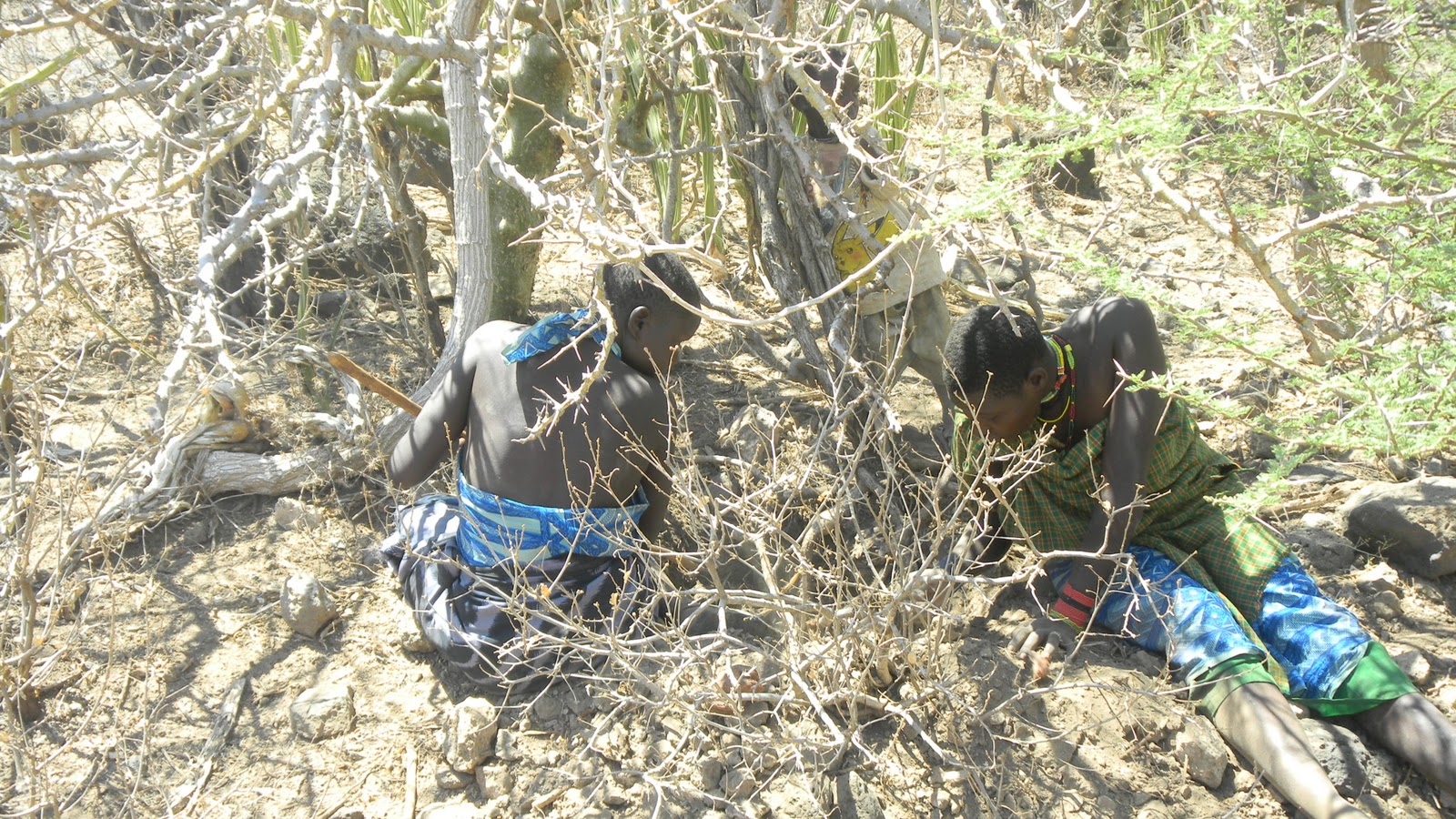
Hadzabe home
We tasted wild berries (probably risky in hindsight, but I’ve been okay), dug for edible roots, and shot bows and arrows.


We moved on to our next destination: another village (Togo, I believe) that specialized in metalworking.

The beadwork on the dresses was incredible
Unfortunately I was a the low point of a cold and was pretty miserable on the hot, dusty day. I was nonetheless able to appreciate how unique these opportunities were, and I felt much better for the rest of the tour.

We spent the night at a safari camp near Ngorongoro crater and had our first showers in almost three days. Incredible. 

Saturday, November 5, 2011

Maasai Village Day 2

The highlight of our second day in Maasai land: observing a goat sacrifice.

After breakfast, we were broken into groups and assigned tasks to help prepare for the event. I collected firewood (prickly acacia branches, ouch) but I was one of the lucky ones….


…yeah, that’s goat poo. The Maasai used it to start the fire needed to heat water and herbs for stew. They then turned their attention to the main attraction. Poor little guy.


Warning: vegetarians became squeamish from this point on. Actually, non-vegetarians did too. My high school FFA meat judging prepared me to watch, and I did okay. The Maasai suffocated him and began the butchery process.

Branches, leaves, heart, and kidney set to boil
Certain organs went into the stew; others were roasted next to the coals. I ate liver, sipped a little of the heart/kidney stew, and drank blood.

Liver
Not so tasty

Disgusting, I know. The Maasai diet actually consists mostly of blood, milk, and meat; porridge sometimes comes into the picture if livestock is unable to meet a family’s needs.

The process lasted, ironically, until lunchtime. After we picked through lunch, we were introduced to Maasai beadwork by the mamas of the village.


The evening held a special opportunity as well: we attended a Maasai dancing and singing ritual (which included the jumping competitions for which the Maasais are well known). 

Thursday, November 3, 2011

Maasai Village: Day 1


After just one night at the UAACC, we departed for a 2 day stay in a Maasai village. We drove a long while through desolate terrain and arrived in even more desolate terrain. We settled into our tents and were introduced to the village by elder Ngongoi (sp?).


He led us on a hike through the desert and pointed out the native trees and bushes common in Maasai traditional medicine. Maasailand was riddled with acacia bushes—viciously thorny shrubs and trees that grab hold when you let your guard down. Ouch.

We were exhausted, burnt, and scratched when we made it to our first destination: a “boma”, the word for a Maasai family’s settlement. Each boma is circular and surrounded by acacia bushes to ward of predators. After learning about the houses at one boma, we headed for another.


And at this boma… we drank traditional chai. Not the ideal drink after our journey through the desert. Regardless, I gave the drink a try even after watching our hosts strain the twigs and leaves out of it. It tasted…like twigs. Oh well, still a cool experience.


That night, we had a Q & A session with the village elders about their culture. After they broke into their traditional aloe drink (which smelled like deadly tequila) they asked us questions as well.

Personal favorite?

“At what age do men in your culture become elders?”

Our response: “umm…65?”

Wednesday, November 2, 2011

Miss Independent

Ah, I leave for Mombasa/Shirazi in 30 minutes! It's time to begin my independent project. Four of us will be riding the night bus to the coast before we split up and go to separate villages and homestays. Today was a busy, exciting day as I tried to get everything ready for my journey. Fortunately, I had time to attend a farewell lunch with the rest of the group at Smart Village, an Ethiopian restaurant near school.


I had one last dinner with Paul, Agness, and the kids. I bought a cake and ice cream, and I think it went over well...the cake was really dry but I've come to expect that from Kenyan cakes. Oh well, dessert is dessert.


Yesterday I was able to go to Hell's Gate, a national park a couple hours outside Nairobi. The day included a safari walk and a hike through Hell's Gate Gorge. Parts of Lara Croft: Tomb Raider were shot in the gorge. Here are some of the highlights:


Off I go to meet my taxi--wish me luck!

Monday, October 31, 2011

United African Alliance Community Center


Last Sunday after crossing the border into Tanzania and continuing on, we arrived at the city of Arusha. Our base for the week was the UAACC. The establishment is run by Pete and Charlotte O’Neal, native US citizens. Pete was a lead member of the leftist Black Panthers in Kansas City during the 1960s. He ran into legal trouble and fled the country in 1970 to avoid legal repercussions. Charlotte, 19 at the time, joined him, and the couple spent a few years in Algeria before moving to Tanzania. Charlotte is able to return to the US and does so frequently to visit family.

Malcolm X Theater: Just one of the buildings named after leading activists

In Arusha, the couple operate this community center which hosts groups like ours. And wow, they knew how to host us! We had an amazing time packed full of opportunities and tastes of home (think taco night).
Stage for periodic performances
The O’Neals have taken in 23 orphans from the Arusha area, and they house them on the grounds of the UAACC. They provide education, art classes, and athletic opportunities to them free of charge.

Children's facilities, garden, and basketball court

Our first night at the UAACC, we watched a documentary on the O’Neals, entitles “A Panther in Africa.” It was really interesting to see it and then ask Pete about key events. He says now that he realizes he was radical in his early years; he expressed happiness that he has become a better person. He still supports the overarching mission of the Black Panthers, which he says was much more about community service than about violence.

The walls and buildings of the center are covered in artwork